

The Real Cost of Interruptions in Sales
Most sales professionals believe they have a time management problem. In reality, many have an interruption management problem.
Every day begins with good intentions. You sit down to prospect, prepare a proposal, update your CRM, or follow up on key opportunities. Then it happens. An email notification appears. A text message arrives. A colleague stops by your desk. A customer calls with an unexpected request. Before you know it, your carefully planned hour of focused work has disappeared.
The modern sales environment is filled with interruptions, and every interruption carries a hidden cost.
Many people assume that shifting attention from one task to another only costs a few seconds. Research and experience suggest otherwise. When you stop working on a task and redirect your attention elsewhere, your brain must mentally disengage from the first activity and then refocus when you return. That transition takes time and energy. Multiply that process dozens of times throughout the day and the productivity loss becomes significant.
For sales professionals, interruptions are especially dangerous because much of the work that drives revenue requires concentration. Prospecting campaigns, account planning, proposal development, follow-up strategies, and client preparation all demand focused thinking. These activities create opportunities and move deals forward. Unfortunately, they are often the first activities sacrificed when interruptions take control of the day.
The impact extends beyond lost productivity.
Frequent interruptions lead to missed follow-ups, forgotten commitments, delayed responses, and inconsistent prospecting. Opportunities stall because critical next steps are not completed on time. Sales cycles become longer. Close rates decline. Stress levels increase as unfinished tasks continue to accumulate.
One of the biggest misconceptions in sales is that responsiveness equals effectiveness. While customer service is important, immediately responding to every email, text message, or notification does not necessarily improve performance. In fact, it often prevents sales professionals from completing the high-value activities that generate results.
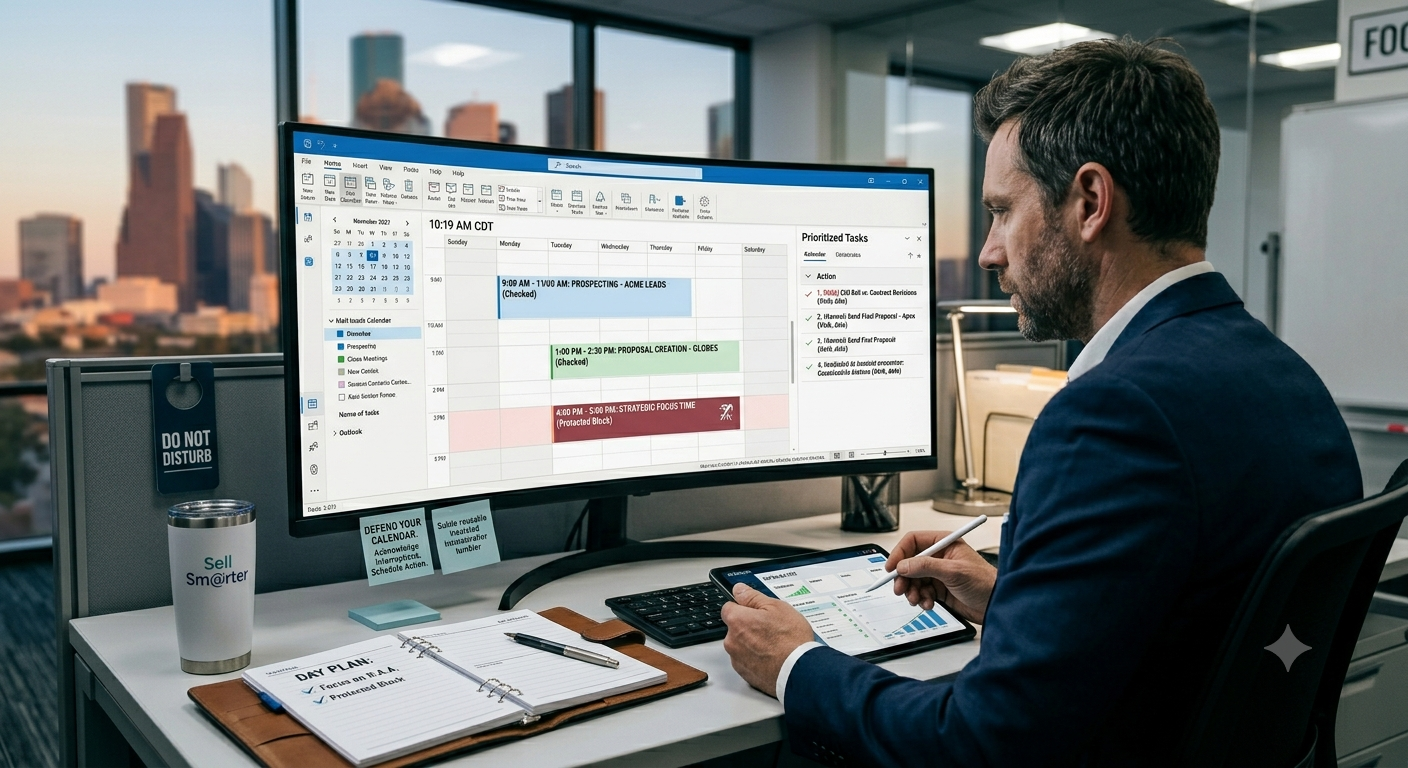
The Sell Sm@rter approach is simple: protect your attention as carefully as you protect your time.
Schedule dedicated blocks for prospecting, client preparation, proposal writing, and strategic account work. Turn off unnecessary email notifications. Process emails at designated times rather than every few minutes. Use your calendar to reserve uninterrupted focus time and treat those appointments with the same respect you would give a client meeting.
The highest-performing sales professionals are not immune to interruptions. They simply refuse to let interruptions dictate their priorities.
If you want to increase productivity, improve follow-up consistency, and generate more revenue, stop measuring how busy you are and start measuring how focused you are. Your attention is one of your most valuable sales assets. Protect it accordingly.
This article is part of our Sell Sm@rter Time Management series. For a complete framework on managing priorities, commitments, and productivity, read our guide: "The Ultimate Guide to Time Management for Sales Professionals: How to Sell Sm@rter with Microsoft Outlook."
Learn more about the Sell Smarter with Microsoft Outlook time and sales workload management program.